Every serious brand decision eventually comes down to one question:
Who are we, psychologically, in the lives of our audience?
Not what we sell.
Not what we look like.
But what emotional and cultural role we occupy.
When brands struggle with inconsistency, when marketing sounds different from packaging, when sub-brands drift away from the parent identity, when teams debate tone endlessly: the problem is rarely design.
It is personality clarity.
At Studio Sorted, brand archetypes are not treated as a workshop gimmick. They are embedded inside our brand strategy process because they influence:
Archetypes are not decorative labels.
They are governance systems for personality.
The concept originates from psychologist Carl Jung, who identified universal character patterns that repeat across cultures: the Hero, the Rebel, the Caregiver, the Sage.
In modern brand strategy, archetypes function as:
They help define:
When archetypes are unclear, brand ecosystems fragment.
When they are clear, identity systems compound.
The Innocent archetype exists in response to chaos.
It believes in transparency, goodness, and simplicity. It does not compete through aggression. It competes through trust.
Safety and moral clarity.
Overwhelm vs reassurance.
The purifier.
Globally, Dove operates strongly within this territory — positioning itself around real beauty and authenticity rather than perfection or performance.
In Studio Sorted’s work with Petricore, Innocent energy shaped both positioning and identity. Because the brand was rooted in regenerative farming, it needed to feel credible, not performative. We built a grounded visual identity system using earth-led palettes and calm typography, and crafted messaging that was honest rather than amplified.
The Innocent archetype influences:
Innocent brands win through integrity.
The Explorer archetype is driven by autonomy.
It appeals to audiences who seek expansion — physically, intellectually, culturally.
Freedom.
Confinement vs possibility.
The seeker.
Jeep exemplifies Explorer positioning — framing ownership as liberation and capability.
In Studio Sorted’s hospitality and lifestyle branding work, Explorer energy often shapes experiential brands — those that position themselves around journey rather than transaction. The visual systems in such projects lean into open compositions, textured materials, and storytelling centered on movement.
Explorer archetypes influence:
Freedom becomes the brand’s promise.
The Hero archetype believes effort produces results.
It thrives in competitive markets and builds identity around strength.
Mastery.
Weakness vs achievement.
The achiever.
Nike is a textbook Hero brand — performance-led, disciplined, unapologetic.
Within Studio Sorted’s portfolio, Smash Guys carries Hero undertones beneath its playful energy. In a saturated QSR market, the bold typography, high-contrast checkerboard system, and assertive tone position it as flavour-dominant rather than generic.
Hero archetypes influence:
Achievement becomes identity.
The Rebel archetype exists to challenge the category.
It thrives when markets feel stale or overly controlled.
Liberation.
Authority vs autonomy.
The challenger.
Harley-Davidson built its brand around defiance and cultural identity.
In challenger brand projects at Studio Sorted, Rebel positioning appears when founders intentionally reject industry aesthetics — especially in food, fashion, or youth-driven markets. But disruption must be strategic. It must be anchored in a clear alternative, not just opposition.
Rebel archetypes influence:
Rebellion works when it’s disciplined.
The Magician archetype promises change.
It positions the brand as a catalyst — not just a provider.
Transformation.
Limitation vs breakthrough.
The catalyst.
Apple frequently operates in Magician territory — selling reinvention, not devices.
In Studio Sorted’s work with innovation-led businesses, Magician positioning informs identity systems that feel immersive and future-facing. Messaging centers on what becomes possible through engagement with the brand.
Magician archetypes influence:
Transformation must feel tangible.
The Creator archetype values imagination and authorship.
Innovation.
Convention vs originality.
The maker.
Adobe embodies Creator positioning by empowering expression.
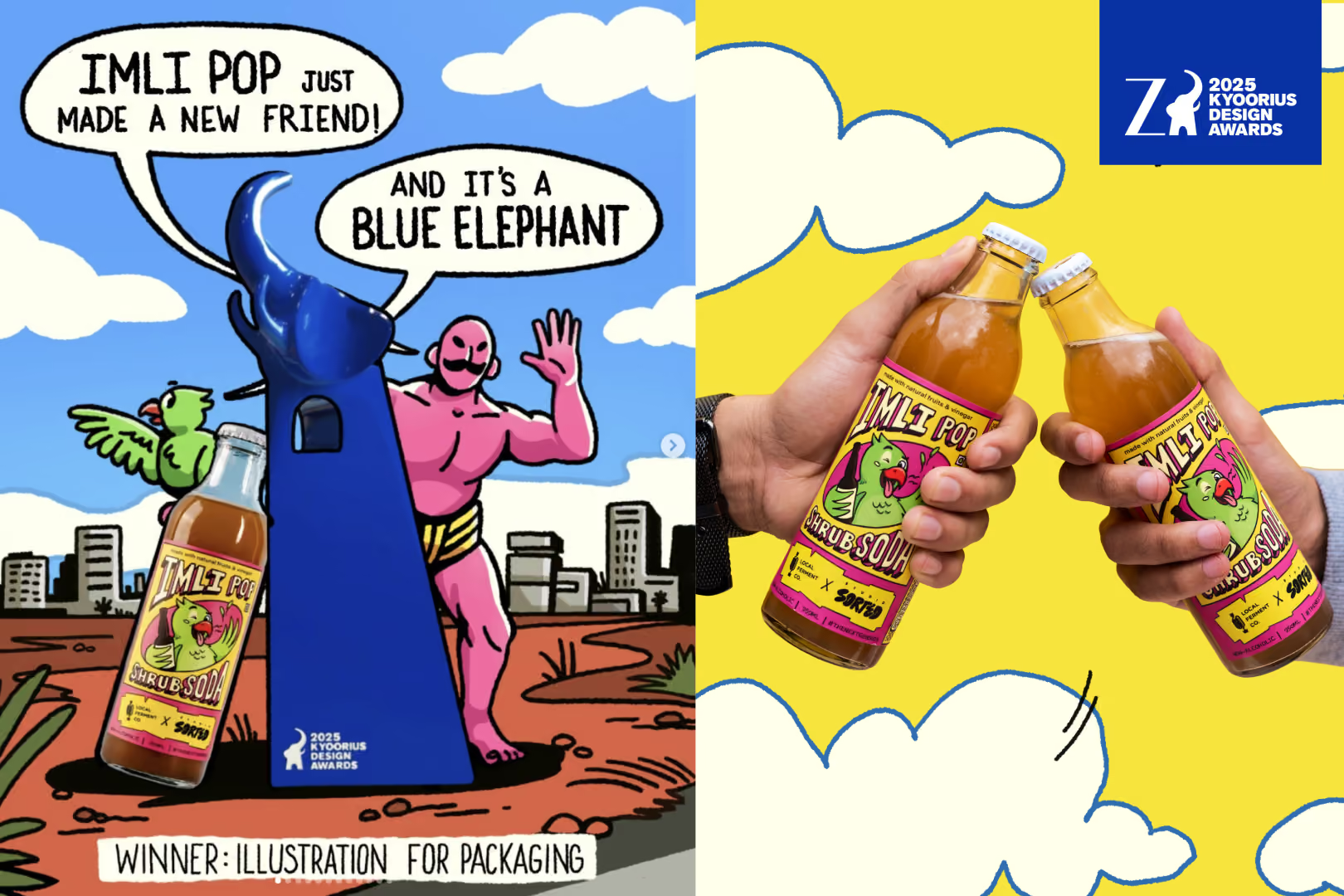
Imli Pop channels Creator energy through expressive typography, comic-inspired characters, and culturally rooted visual storytelling. The system is playful but intentional — nostalgic yet contemporary.
Creator archetypes influence:
Creation becomes identity.
The Caregiver archetype builds trust through responsibility.
Protection.
Vulnerability vs security.
The protector.
Johnson & Johnson is a long-standing Caregiver brand.
Petricore’s sustainability positioning overlaps here — protecting soil health and ecological systems through regenerative methods.
Caregiver archetypes influence:
Responsibility builds equity.
The Ruler archetype signals control, structure, and excellence.
Stability.
Disorder vs hierarchy.
The authority.
Rolex embodies Ruler positioning through precision and prestige.
In Studio Sorted’s premium hospitality and real estate branding, Ruler energy shapes disciplined visual systems — structured typography, refined palettes, and controlled layouts.
Ruler archetypes influence:
Authority must be earned through consistency.
The Lover archetype centers on emotional connection.
Intimacy.
Indifference vs desire.
The romantic.
Chanel exemplifies Lover positioning through sensory elegance.
In Studio Sorted’s beauty and hospitality projects, Lover positioning shapes material choices, tactile packaging, and immersive spatial branding.
Lover archetypes influence:
Desire becomes the differentiator.
The Jester archetype thrives on wit and cultural awareness.
Joy.
Seriousness vs spontaneity.
The entertainer.
Old Spice redefined its category through humour.
Imli Pop both incorporates Jester energy, through bold colour systems, playful copywriting, and culturally resonant references.

Jester archetypes influence:
Joy becomes recall.
The Everyman archetype values belonging.
Inclusion.
Elitism vs accessibility.
The friend.
IKEA exemplifies democratic design and approachable communication.
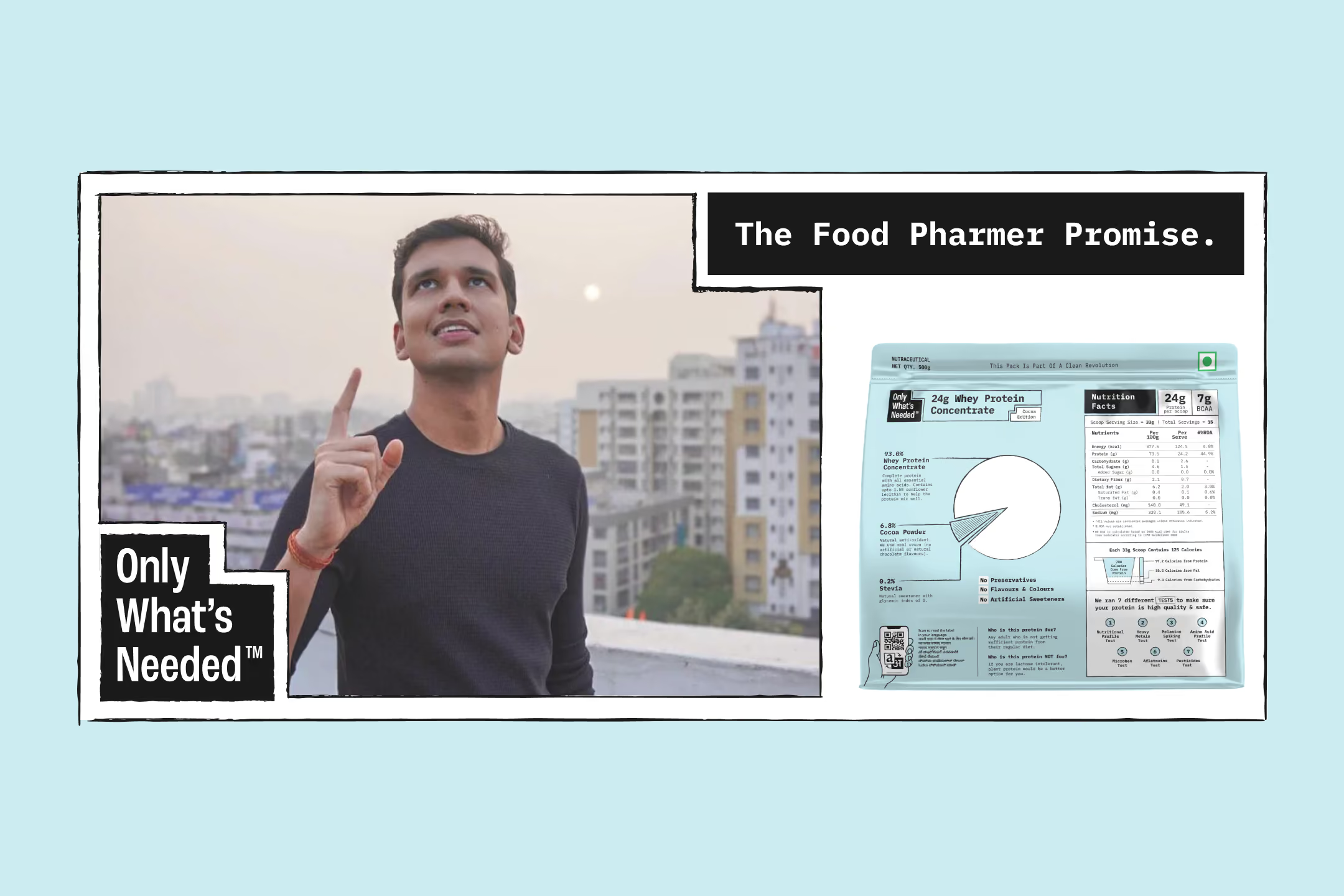
In Studio Sorted’s D2C projects such as Only What's Needed, which targets mass audiences, Everyman positioning informs simple messaging, friendly typography, and community-oriented storytelling.
Everyman archetypes influence:
Belonging builds scale.
The Sage archetype seeks understanding.
Truth.
Confusion vs clarity.
The guide.
Google reflects Sage positioning through structured information and clarity.
Within Studio Sorted’s own brand strategy thinking, Sage energy appears in research-led positioning, competitive audits, and structured brand architecture development.
Sage archetypes influence:
Wisdom becomes differentiation.
As brands scale — across categories, geographies, and verticals — personality fragmentation becomes a real risk.
Archetypes act as governance mechanisms.
They ensure:
At Studio Sorted, archetypes emerge from research, founder belief, market tension, and long-term ambition — not preference.
They are integrated into:
Because branding at scale is not about aesthetics. It is structural.
Brand archetypes are not about choosing a personality because it sounds appealing.
They are about defining the psychological role your brand plays — and building every system around it.
When that role is clear:
Brand positioning sharpens.
Brand story aligns.
Visual identity strengthens.
Packaging becomes coherent.
Brand architecture scales intelligently.
And over time, equity compounds.
That is the real power of archetypes — not as labels, but as strategic anchors.
Lorem ipsum dolor sit amet, consectetur adipiscing elit, sed do eiusmod tempor incididunt ut labore et dolore magna aliqua. Ut enim ad minim veniam, quis nostrud exercitation ullamco laboris nisi ut aliquip ex ea commodo consequat. Duis aute irure dolor in reprehenderit in voluptate velit esse cillum dolore eu fugiat nulla pariatur.
Block quote
Ordered list
Unordered list
Bold text
Emphasis
Superscript
Subscript