Premium in India used to be a fairly predictable formula. Make it shinier. Make it bigger. Make it more exclusive. Add a celebrity, a high production film, a dramatic launch, and a price point that signals “not for everyone”.
That definition still exists, but it’s no longer the whole story. In many categories, it’s not even the most interesting story.
Today, premium is being rewritten by a generation that has grown up inside the internet, inside advertising, inside algorithms, inside constant persuasion. They don’t just consume products. They consume signals. They can detect privilege, overacting, polish-for-the-sake-of-polish, and brand theatre that doesn’t match reality.
And once they detect it, they scroll.
This is why the future of premium experiences in India is not a race to look expensive. It’s a race to feel real, feel intentional, and feel culturally awake, while still delivering craftsmanship and value. The brands that win will stop treating premium as a visual style, and start treating it as a relationship.
A big change is that premium isn’t automatically “more distant” anymore.
For a long time, premium meant gatekeeping. A certain kind of language. A certain kind of store. A certain kind of customer service that was polite, but cold. The consumer accepted that distance as part of the deal.
Now, distance reads like insecurity.
Today’s consumer still wants quality, but they want access over status. They want to feel included, not judged. They want the brand to be confident enough to speak like a human, not hide behind a glass wall of perfection.
This is also why you’re seeing premiumisation and value-seeking exist side by side in India. People will happily spend on what feels meaningful, considered, and identity-aligned, while simultaneously refusing to pay for “because we said so” branding. Flipkart has also pointed to a growing tilt toward premium products beyond metros, including Tier 2 and Tier 3 cities, which changes what “premium experiences” need to look like in India at scale. (The Times of India)
What this means for brands:
Premium is no longer a tax you charge for aesthetics. It’s a promise you keep through experience.
The younger audience is the most in-demand and the most misunderstood because they’ve been trained by the internet to see through intent.
They’ve grown up surrounded by marketing gimmicks, tech, and content. So they can smell an ad instantly. Anything that feels too polished, too perfect, too rehearsed, too “high production”, too performative reads as manipulation. And their instinct is to push against it.
That’s why rawness is winning.
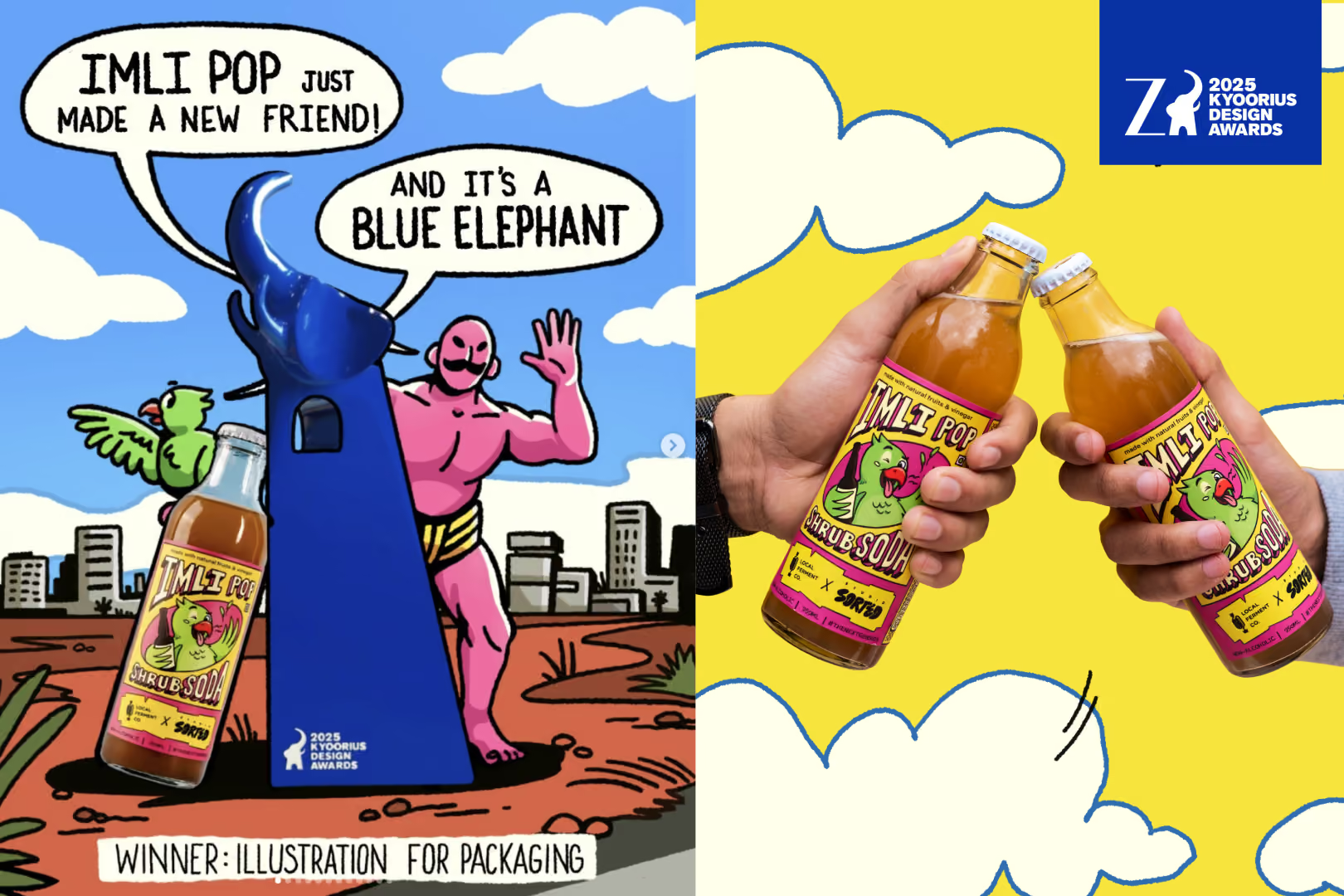
Not because quality doesn’t matter, but because honesty matters more than performance. Even celebrities now chase relatability through vlogs, low-fi formats, and a behind-the-scenes tone, because the audience rewards “I’m real” more than “I’m ideal”.
This is also why creators often have stronger influence than brands or celebrities. India’s creator economy has scaled massively, with millions of creators and accelerating influencer marketing spend. (Kofluence)
And Gen Z’s path to purchase is increasingly shaped by platforms that feel like discovery, not selling. For example, Google’s APAC research with Kantar highlights how YouTube influences purchase confidence for Gen Z in India. (Google Business)
What this means for brands:
Stop trying to “convince”. Start trying to “connect”.
One of the biggest shifts in premium experiences is scale.
Earlier, the “premium” signal in hospitality and food was often size: big breweries, huge menus, loud spaces, lots of variety. It felt premium because it looked like abundance.
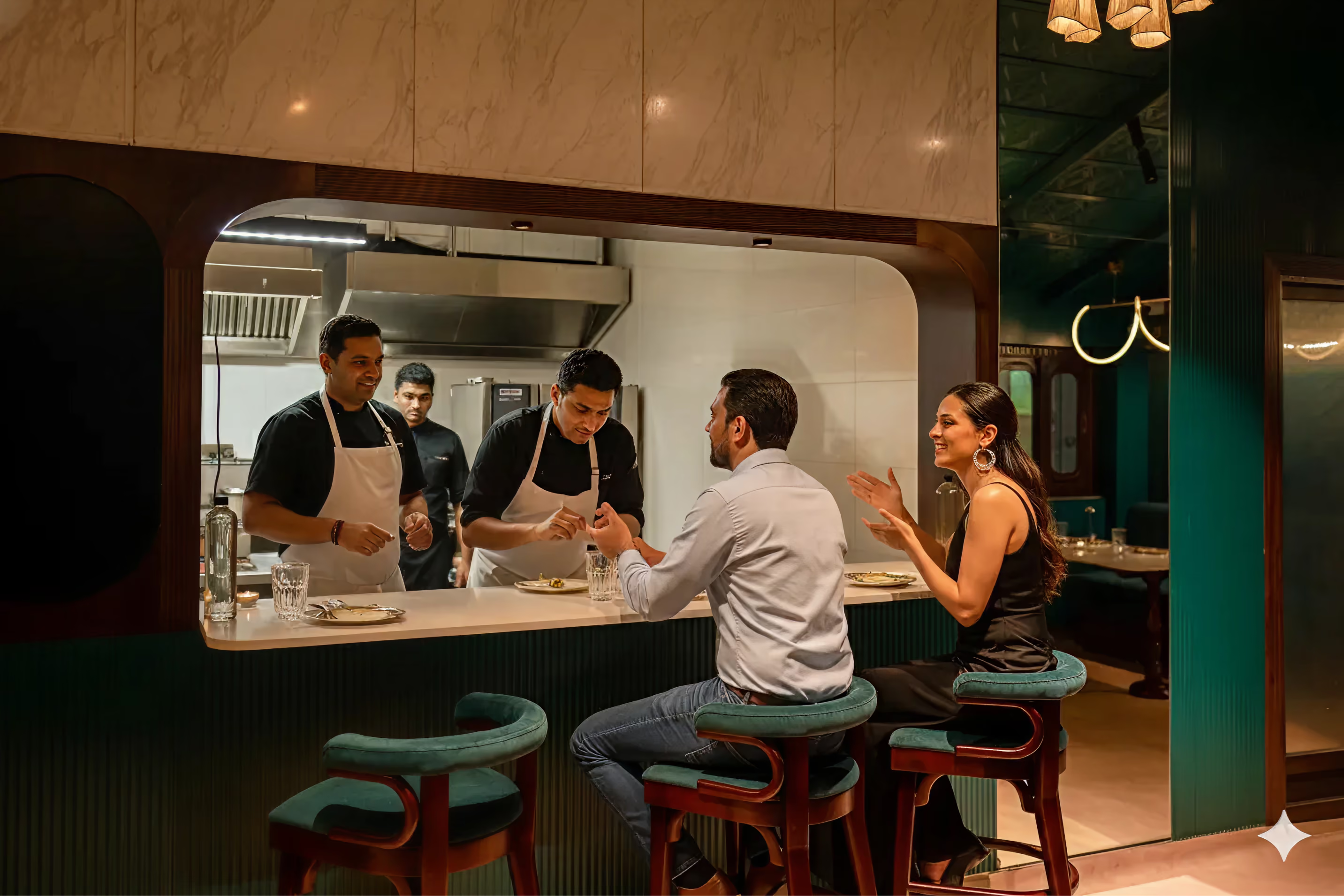
Now, premium increasingly looks like the opposite: the 10 to 20 seater you can’t get into. The experience where the staff knows you. The menu that’s edited, not endless. The place that doesn’t shout, but still has a line outside.
Because intimacy feels like care.
And care feels premium.
The real flex is not space. It’s attention.
A brand that can deliver an experience that feels personal, even if it serves thousands, will outperform the brand that looks premium but feels generic.
What this means for brands:
Design experiences that feel like they were made for a person, not a crowd.
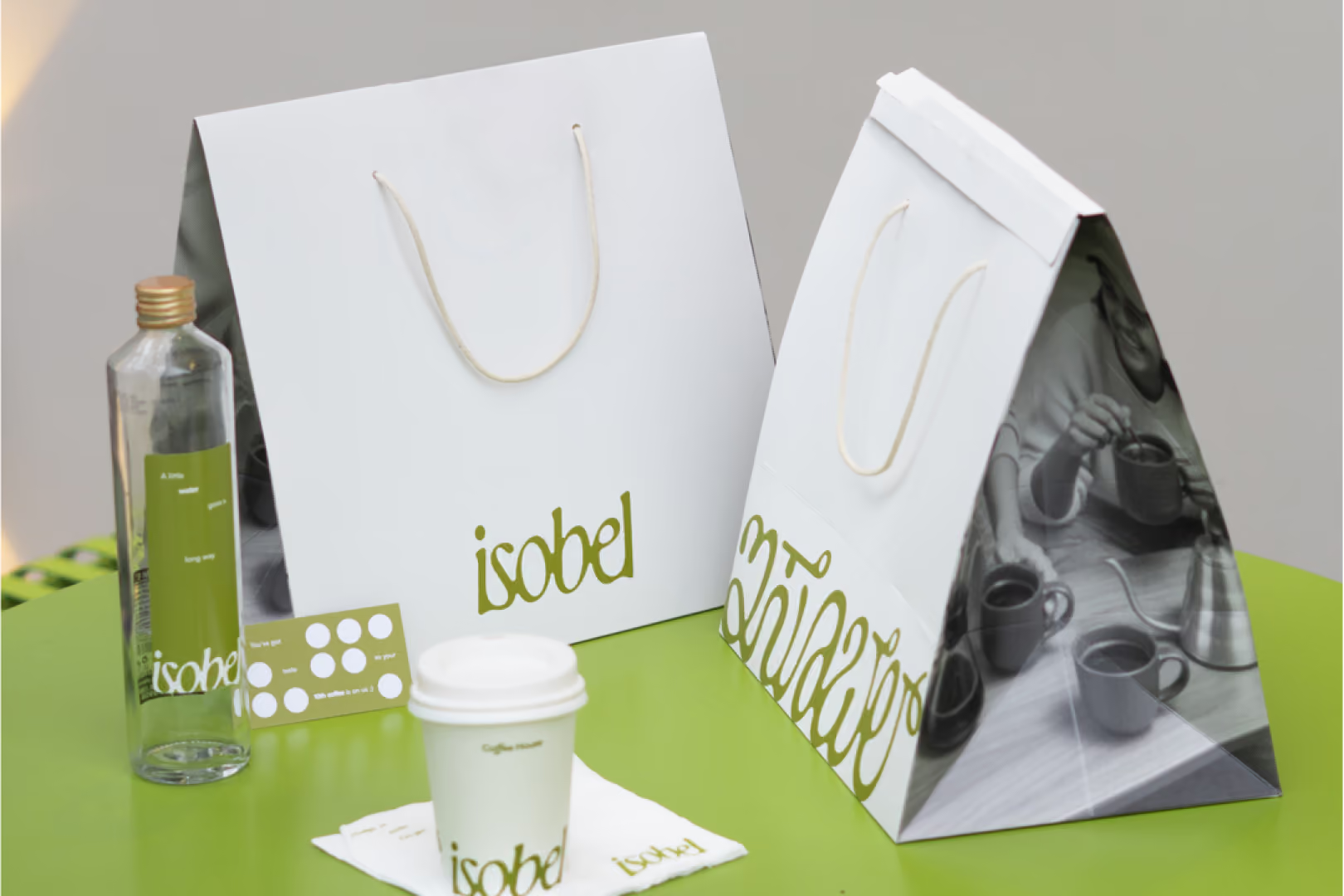
In a world where products are easily comparable, premium is increasingly created by the thing that doesn’t fit into a spec sheet.
The “X factor” might be:
This is why brands that go beyond the traditional product experience earn disproportionate loyalty. It’s also why “experience over possession” continues to show up as a structural shift in luxury consumption globally, and it echoes into India’s premium landscape as well. (Bain)
What this means for brands:
Premium is not one big moment. It’s 50 small, consistent moments done with intent.
Because everyone wants to be the main character!
The content era has changed people’s sense of self.
When your life is constantly being curated, documented, and shared, you don’t just want to buy something. You want to feel seen inside the experience of buying it.
That’s why personalisation and customisation are becoming central to premium experiences, especially in events and community-driven launches. People want the feeling that the experience changed slightly because they showed up.
Not fake personalisation. Real personalisation.
The kind that makes someone walk away thinking: “That was for me.”
What this means for brands:
If your experience is identical for everyone, it will be forgotten by everyone.
A major reason premium is changing is trust.
Trust doesn’t come from production value anymore. It comes from proximity. People trust the human story, not the corporate claim.
That’s why founder-led communication has become such a powerful growth engine across Indian categories, especially wellness, skincare, food, and D2C. Consumers don’t just want a brand’s promise. They want the builder’s worldview.
The shift is visible across the ecosystem: more brands building in public, more founders showing their process, more transparency as marketing.
And when done right, it reduces the need for traditional marketing theatrics, because the audience becomes the amplifier.
What this means for brands:
If you want resonance, don’t only build a product. Build a narrative your audience wants to carry.
The old customer relationship was transactional: I buy, you sell.
The new relationship is participatory: I belong, I contribute, I influence.
This shows up in:
Premium is increasingly created through belonging. When someone feels like an insider, they’ll defend you, advocate for you, and bring you into rooms you’ll never enter.
What this means for brands:
Don’t just build for your audience. Build with them.
India is not one consumer. It’s multiple Indias living at different speeds.
So the future of premium in India is not about acting elite. It’s about being culturally fluent across contexts. Premium experiences have to feel aspirational without feeling alien.
This is also why we’re seeing a stronger tilt toward local, homegrown brands for reasons like authenticity and values, not just celebrity endorsement. (The Times of India)
And it’s why brands that carry cultural meaning, not just visual polish, are increasingly sticky.
What this means for brands:
Premium isn’t about excluding people. It’s about elevating them.
We’re at peak consumption. The noise is insane. Everyone is launching something. Every category is crowded. Every feed is full.
In this environment, branding is less about looking good and more about surviving with clarity.
The most future-proof brands will build systems that:
This is especially relevant in a trend-cycling culture where “the year” has an aesthetic and the internet moves fast. You can’t rebuild your brand every quarter. You need a system that can flex without breaking.
What this means for brands:
Build a brand system that can evolve, not a brand look that expires.
Premium experiences in India are moving from polish to intimacy, from exclusivity to access, from brand claims to human trust, from performance to participation.
The future belongs to brands that can hold two truths at once:
That’s the new definition of premium: not expensive, but intentional.