Platform for Collective Wisdom
An identity system for interconnected knowledge
About
Year: 2025
Platform for Collective Wisdom (PCW) is a knowledge ecosystem designed to bring research, lived experience, institutional expertise and oral knowledge into conversation. Studio Sorted created a visual identity that made this interconnected model of knowledge tangible and recognisable.
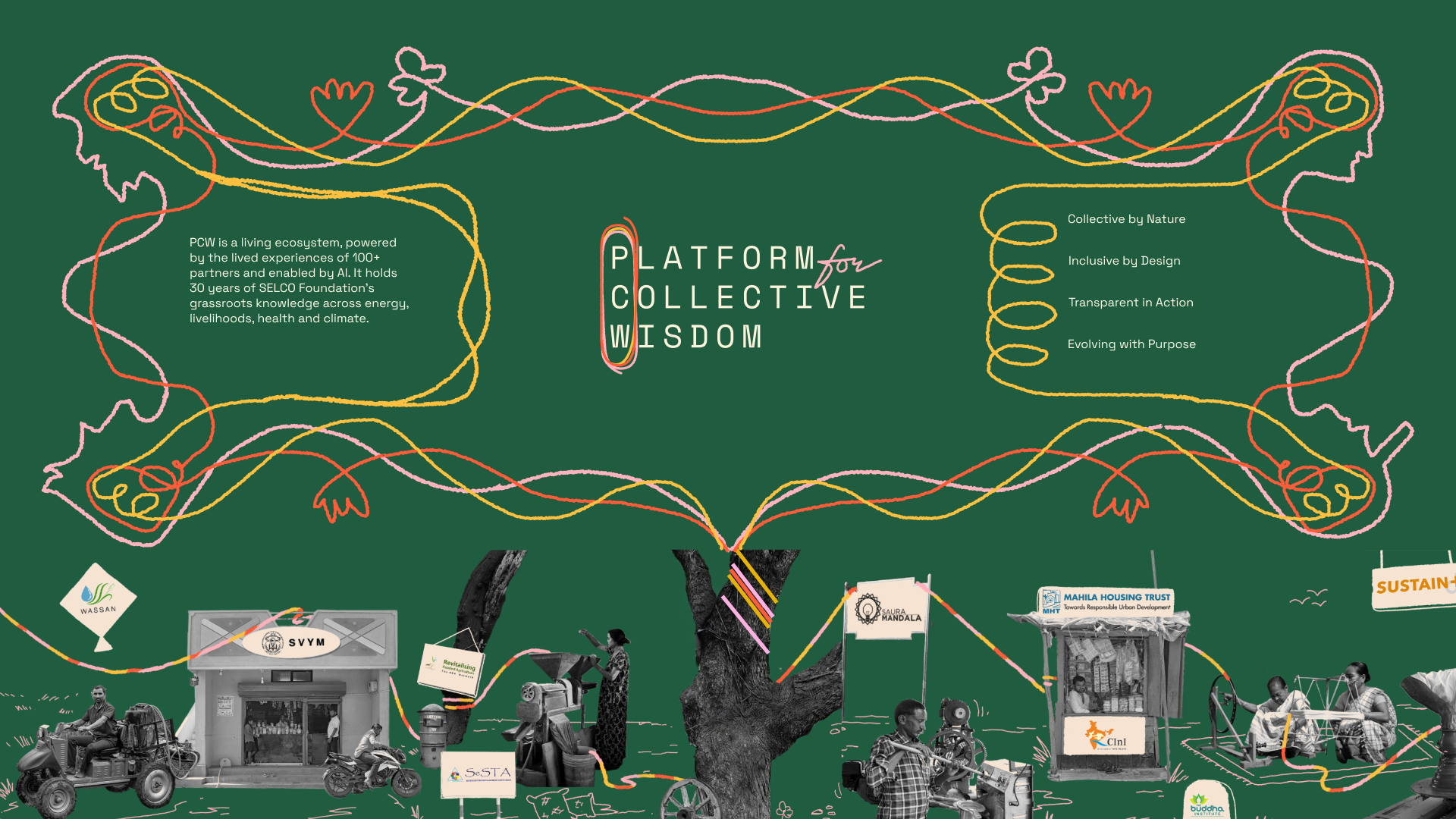
PCW is a living ecosystem, powered by the lived experiences of 100+ partners and enabled by AI. It holds 30 years of SELCO Foundation’s grassroots knowledge across energy, livelihoods, health and climate.
What is Platform for Collective Wisdom?
Platform for Collective Wisdom (PCW) is an interdisciplinary knowledge ecosystem that connects research, lived experience, institutional expertise and conversations. Knowledge about development and social challenges is distributed across institutions, disciplines and practitioners. PCW brings these sources into a shared space, where relationships between them can become visible.The identity question followed naturally: how do you create an identity for something whose value comes from the relationships between pieces of information?
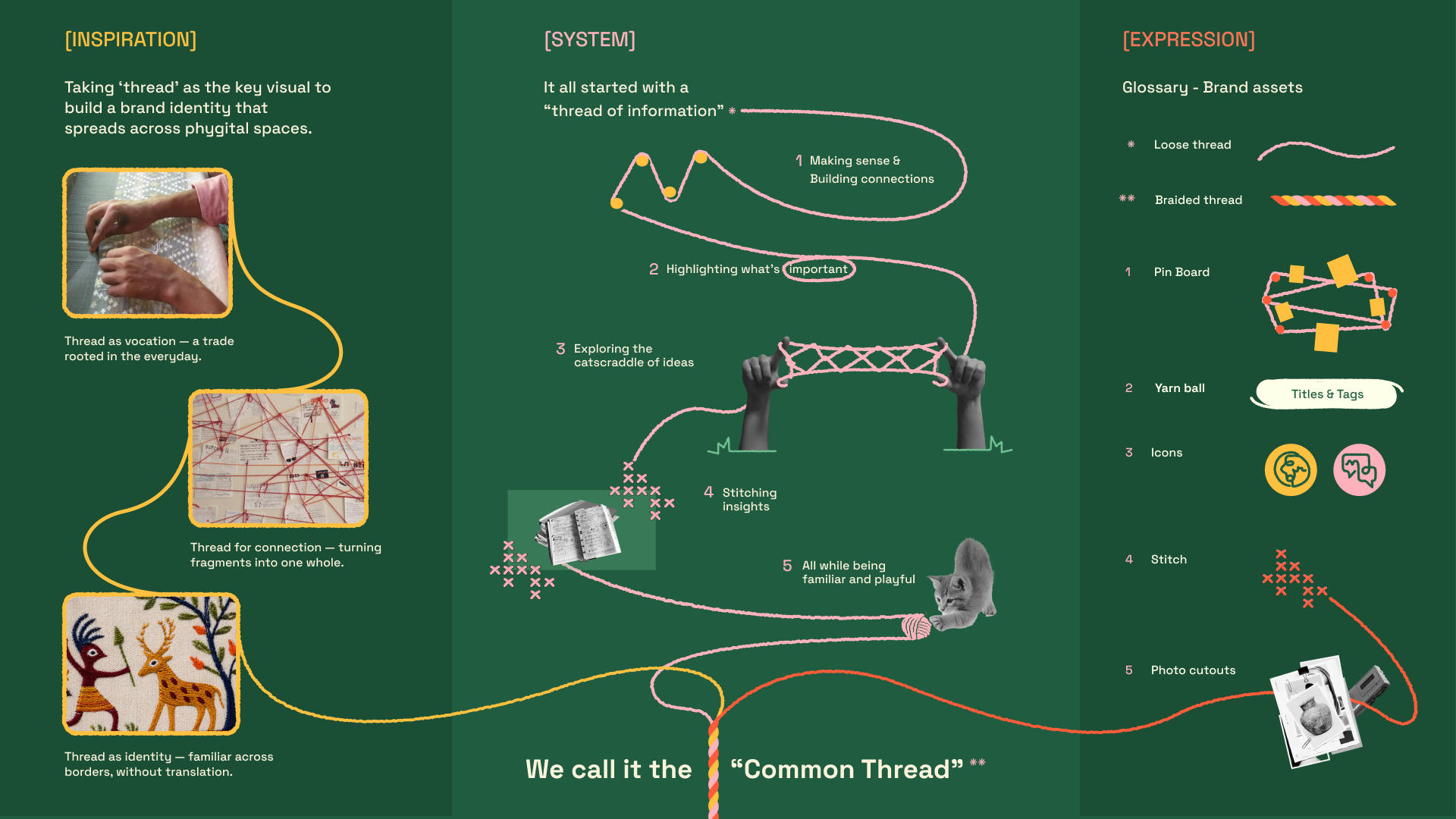
The challenge of making collective knowledge visible
PCW is an evolving ecosystem. Its identity needed to express multiplicity, connection, cross-reference and the capacity to grow as new contributors, subjects and artefacts entered the platform. The design opportunity was to build a visual logic that behaved like the platform itself.
A visual identity built around connections
The defining shift was to represent knowledge through its relationships. Connections, intersections and references became a more useful visual model for PCW than a static collection of separate items. This gave the platform a way to make its proposition visible before it was explained in words.
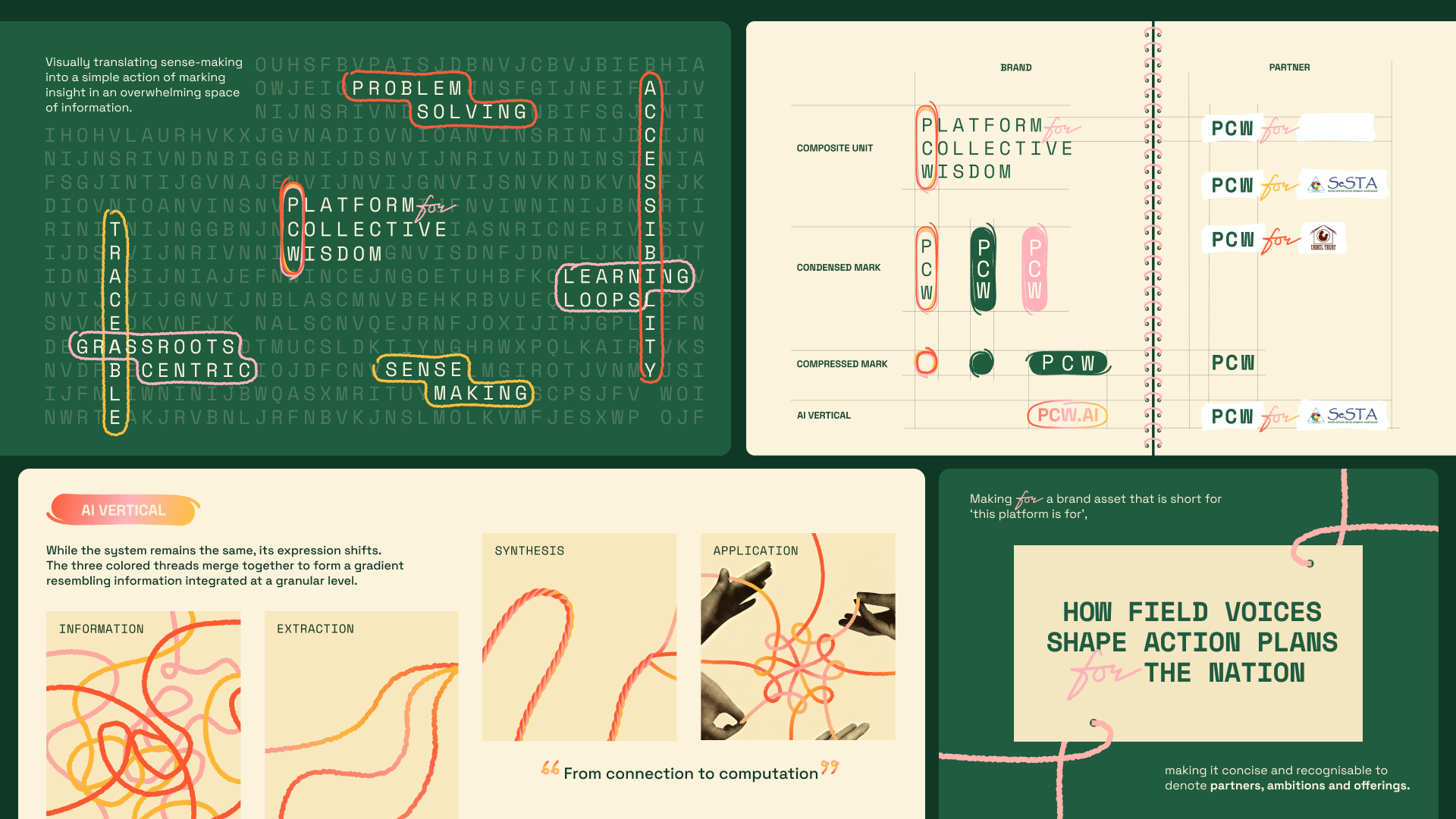
A system for many forms of knowledge
As organisations, practitioners and knowledge artefacts enter PCW, the identity has to hold material that differs in origin, medium and subject. Research can sit beside lived experience; conversations and oral knowledge can sit alongside formal documentation. The system provides a common structure while allowing these voices to remain distinct.
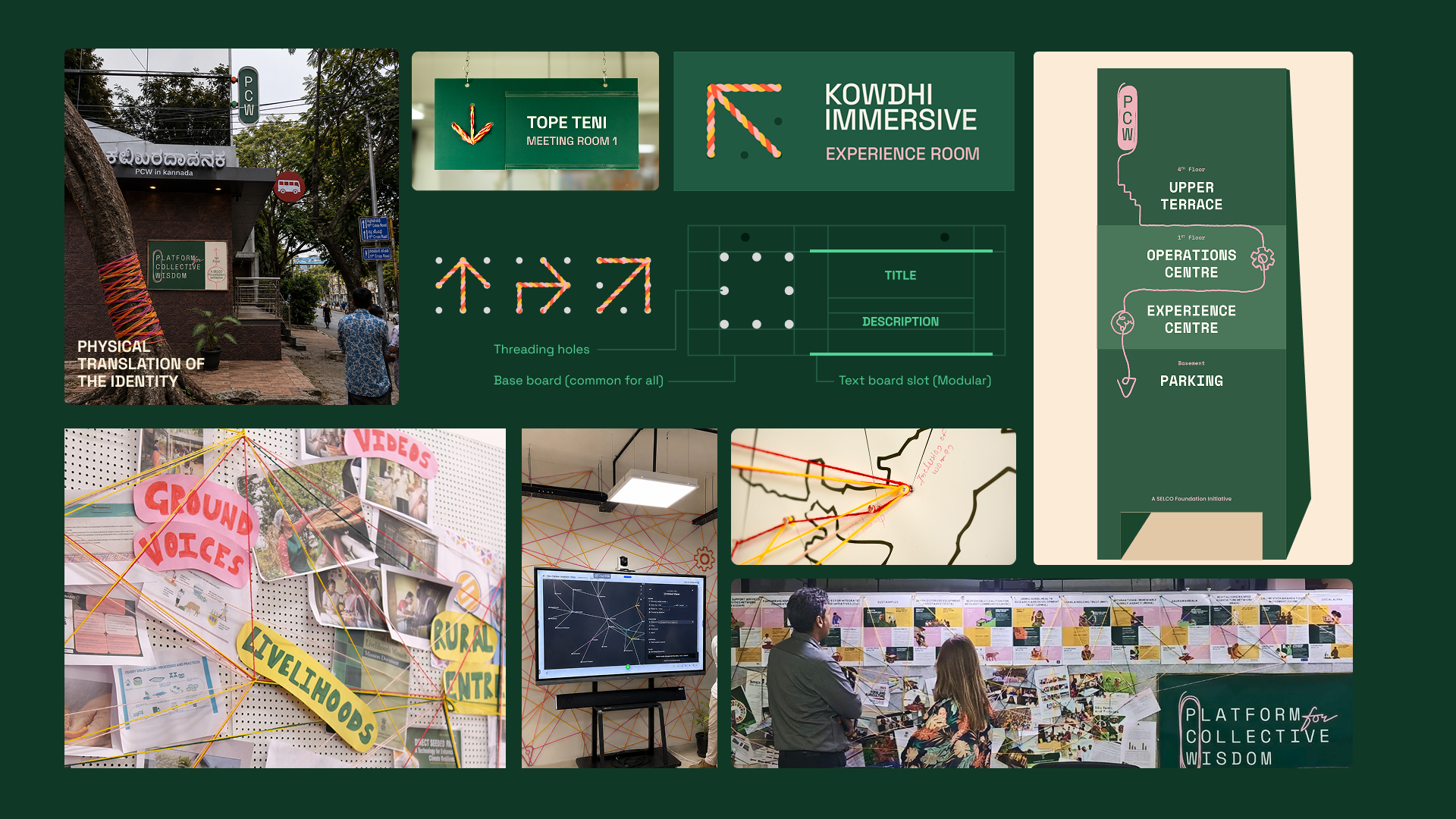
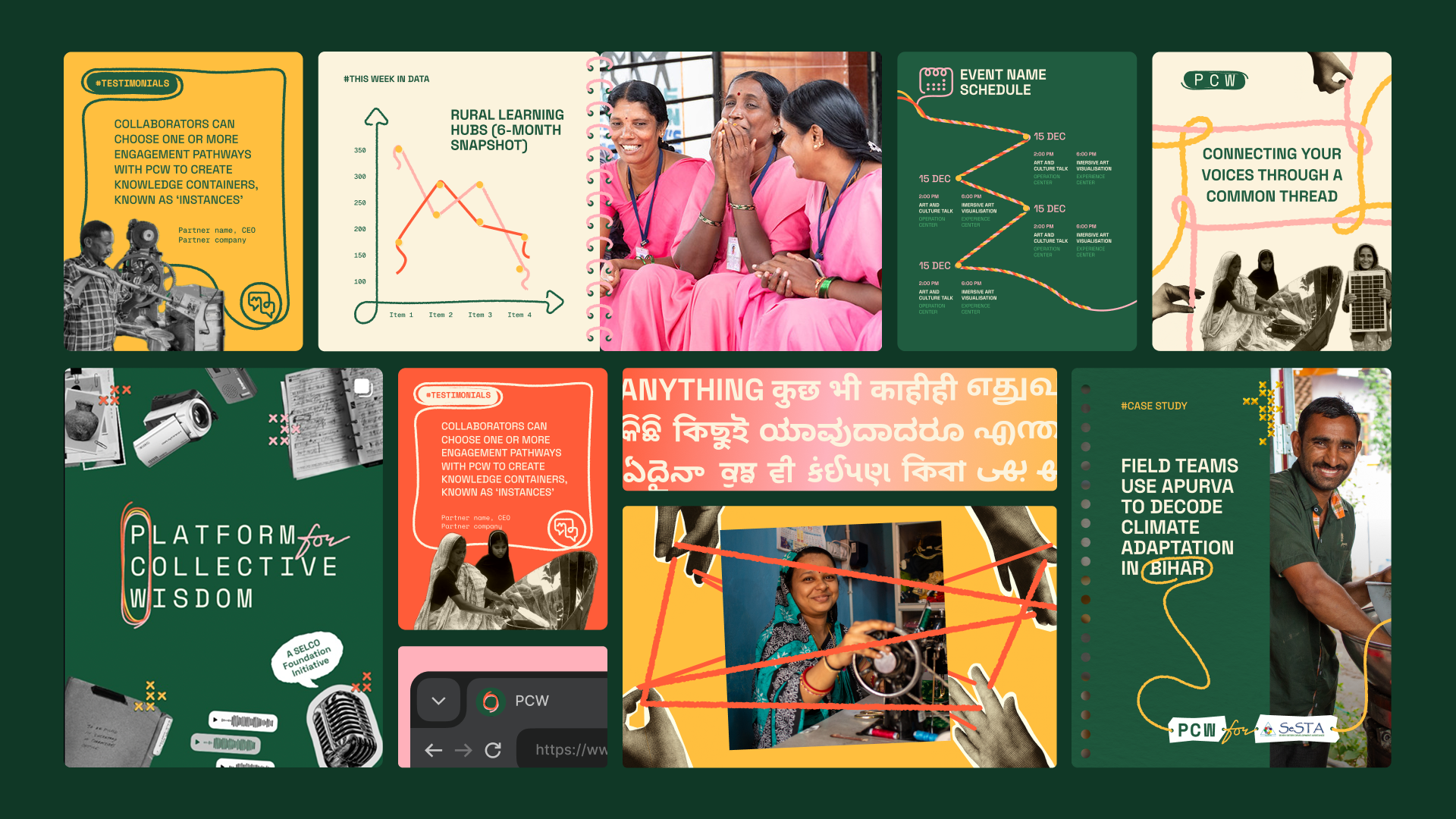
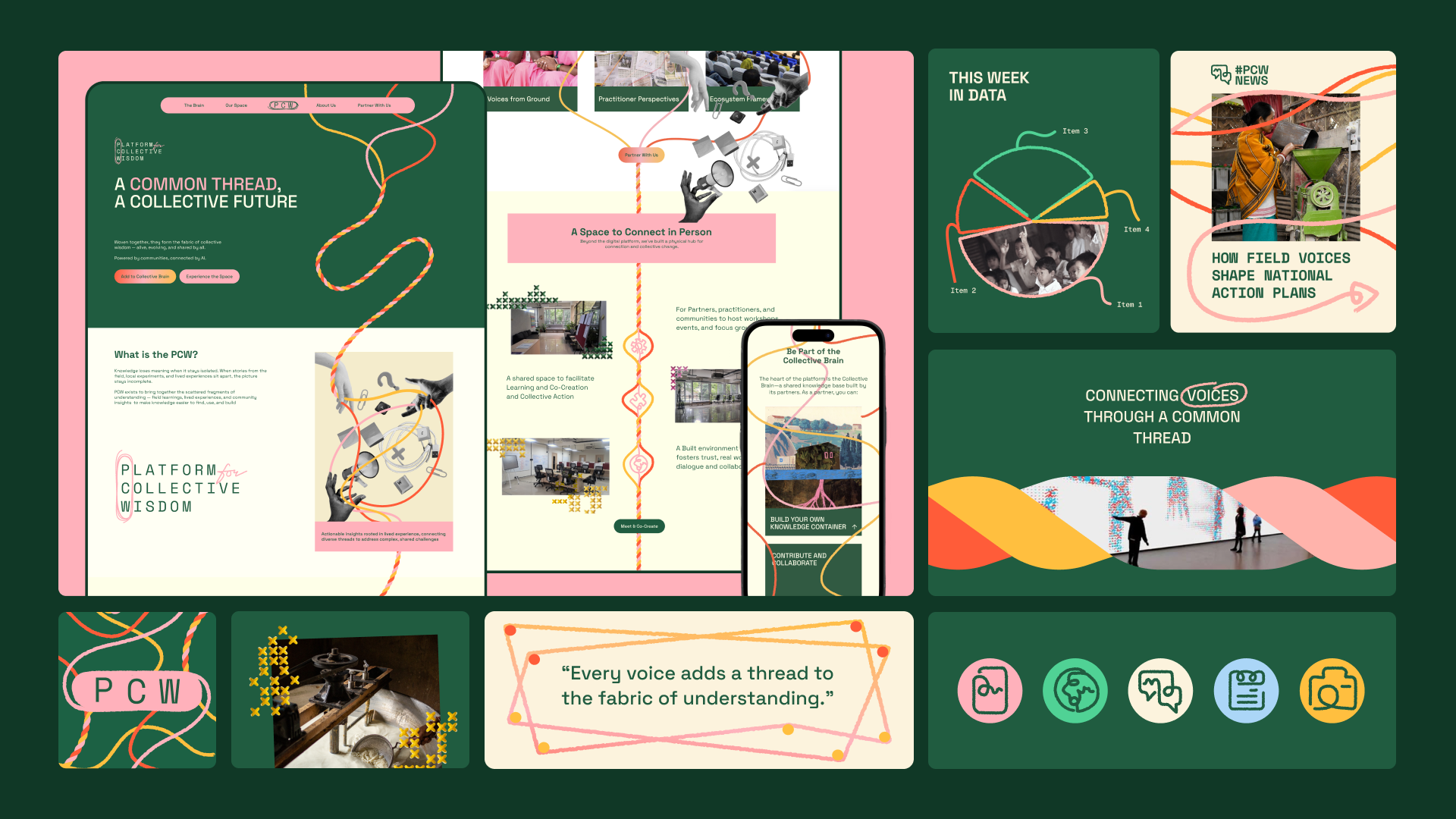
The PCW visual identity in use
The identity was developed to travel across conversations, gatherings, knowledge artefacts and public-facing moments while the content around it continued to change.
PCW began with a proposition that is simple to state but difficult to visualise: complex problems call for knowledge from different sources to meet. Its identity gives those relationships a visible form. As organisations, practitioners and artefacts enter the platform, the system can continue to reveal new connections.
Studio Sorted creates brand strategy and identity systems for organisations, platforms and businesses navigating complex ideas.
PCW began with a proposition that is simple to state but difficult to visualise: complex problems call for knowledge from different sources to meet. Its identity gives those relationships a visible form. As organisations, practitioners and artefacts enter the platform, the system can continue to reveal new connections.
Studio Sorted creates brand strategy and identity systems for organisations, platforms and businesses navigating complex ideas.
PCW's first year as a knowledge ecosystem
In its first year, PCW developed into an active knowledge ecosystem, bringing institutional expertise and practitioners across domains into a shared space. Its artefacts span research, lived experiences, conversations and oral knowledge. The identity helped make an abstract proposition tangible by visually demonstrating how knowledge can connect and cross-reference.
Team
Creative Direction: Abhishek Durani
Strategy: Vrinda Gupta, Kashish Choudhary
Design: Anshul Gupta, Vrinda Gupta, Afeef Khan, Yash Vardhan Kumar
Strategy: Vrinda Gupta, Kashish Choudhary
Design: Anshul Gupta, Vrinda Gupta, Afeef Khan, Yash Vardhan Kumar
FAQs
What is shrub soda?
Shrub soda is a beverage made using fruit, sugar, and vinegar, giving it a tangy, slightly sour profile. In India, brands like Imli Pop are reinterpreting shrub sodas using familiar flavours like tamarind to create a nostalgic yet modern drinking experience. This makes it a great example of how traditional taste can meet contemporary beverage branding.
What is nostalgic branding?
Nostalgic branding is a design approach that draws from shared cultural memories such as childhood experiences, retro visuals, and familiar references. In India, this often includes matchbox art, comics, candy packaging, and pop culture from the 90s and early 2000s. Imli Pop is a strong example of nostalgic Indian branding, where design triggers memory while still feeling fresh and relevant.
How does cultural branding help Indian brands stand out?
Cultural branding helps brands feel more relatable and distinctive by grounding them in local context. Instead of generic global aesthetics, brands like Imli Pop use Indian visual language, humour, and storytelling to create deeper emotional recall. This approach is especially effective for F&B brands looking to build strong identity and connect with modern Indian audiences.
Who designed the Imli Pop branding?
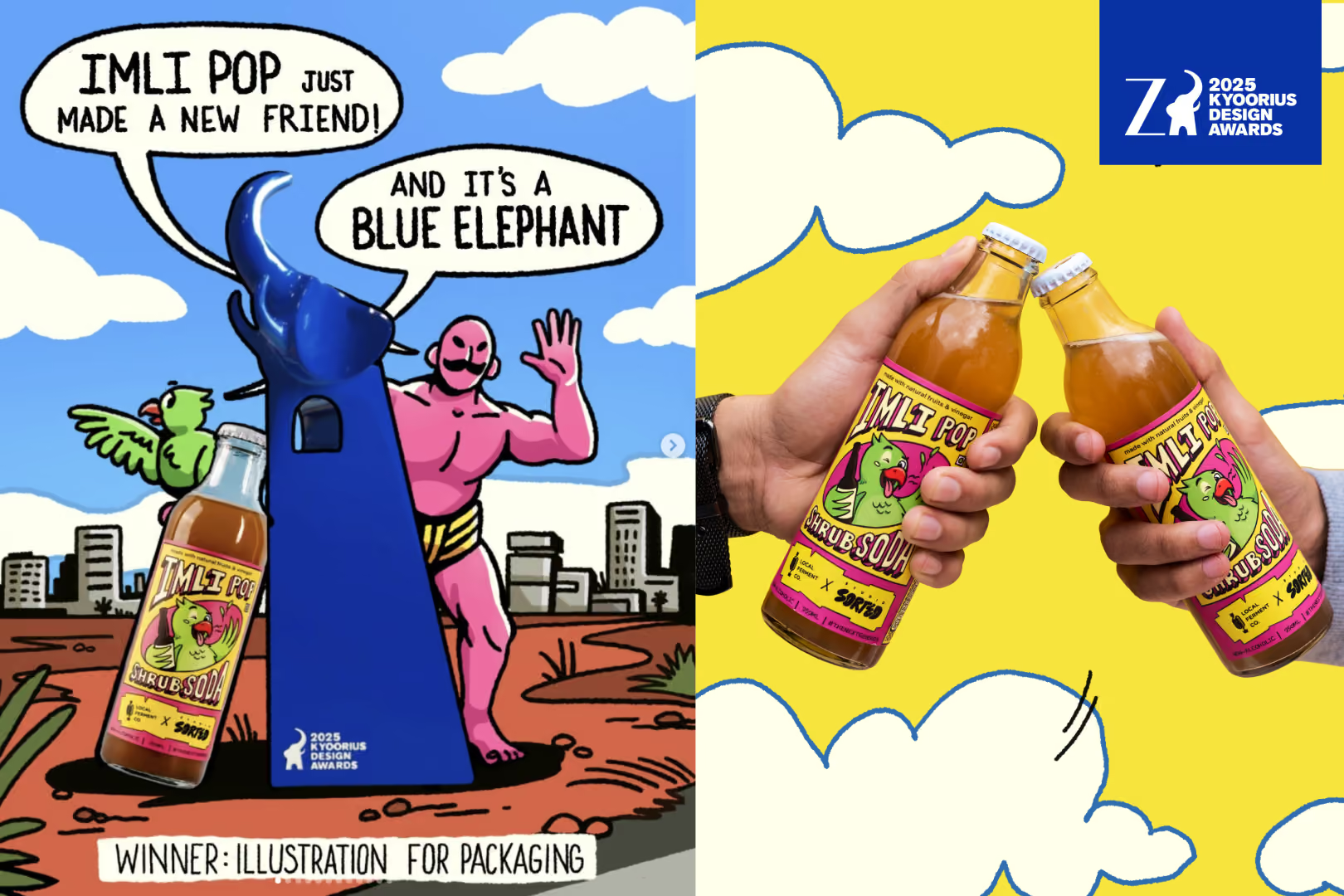
The Imli Pop branding, packaging design, and campaign were created by Studio Sorted, a branding agency in India specialising in F&B and culturally rooted brand systems. The project is a collaboration with Local Ferment Co. and Panic Press, combining beverage innovation, design, and merchandise into a single brand experience.
What makes Imli Pop a unique beverage branding project?
Imli Pop stands out as a case study of quirky beverage branding in India. It combines tamarind shrub soda with retro Indian design, character-led storytelling, and a full ecosystem including merch and experiential launch. It is also a strong example of a brand collaboration between a design studio and a beverage company, resulting in a culturally rich and commercially distinct product.
How can quirky branding work for modern brands?
Quirky branding works when it is rooted in clear strategy and cultural insight, not just aesthetics. Brands like Imli Pop show how playful, expressive design can still be structured and scalable. For businesses looking to stand out, especially in competitive categories like food and beverage, quirky branding can create strong recall, differentiation, and shareability.
Shrub soda is a beverage made using fruit, sugar, and vinegar, giving it a tangy, slightly sour profile. In India, brands like Imli Pop are reinterpreting shrub sodas using familiar flavours like tamarind to create a nostalgic yet modern drinking experience. This makes it a great example of how traditional taste can meet contemporary beverage branding.
What is nostalgic branding?
Nostalgic branding is a design approach that draws from shared cultural memories such as childhood experiences, retro visuals, and familiar references. In India, this often includes matchbox art, comics, candy packaging, and pop culture from the 90s and early 2000s. Imli Pop is a strong example of nostalgic Indian branding, where design triggers memory while still feeling fresh and relevant.
How does cultural branding help Indian brands stand out?
Cultural branding helps brands feel more relatable and distinctive by grounding them in local context. Instead of generic global aesthetics, brands like Imli Pop use Indian visual language, humour, and storytelling to create deeper emotional recall. This approach is especially effective for F&B brands looking to build strong identity and connect with modern Indian audiences.
Who designed the Imli Pop branding?
The Imli Pop branding, packaging design, and campaign were created by Studio Sorted, a branding agency in India specialising in F&B and culturally rooted brand systems. The project is a collaboration with Local Ferment Co. and Panic Press, combining beverage innovation, design, and merchandise into a single brand experience.
What makes Imli Pop a unique beverage branding project?
Imli Pop stands out as a case study of quirky beverage branding in India. It combines tamarind shrub soda with retro Indian design, character-led storytelling, and a full ecosystem including merch and experiential launch. It is also a strong example of a brand collaboration between a design studio and a beverage company, resulting in a culturally rich and commercially distinct product.
How can quirky branding work for modern brands?
Quirky branding works when it is rooted in clear strategy and cultural insight, not just aesthetics. Brands like Imli Pop show how playful, expressive design can still be structured and scalable. For businesses looking to stand out, especially in competitive categories like food and beverage, quirky branding can create strong recall, differentiation, and shareability.
Not Done Yet!
Here’s Some More
Here’s Some More
Branding isn’t decoration. It’s direction.
It’s what helps people choose you, trust you, and come back.
And it only works when it’s thought through.
It’s what helps people choose you, trust you, and come back.
And it only works when it’s thought through.
Let's Connect.

Stay in the loop.
No spam, no smalltalk. Only real interesting updates.


